01
Platform
The heart
Rebuilt HubSpot automations, connected to Zoom and Microsoft 365, have given a leading Yorkshire law firm a more efficient events process.
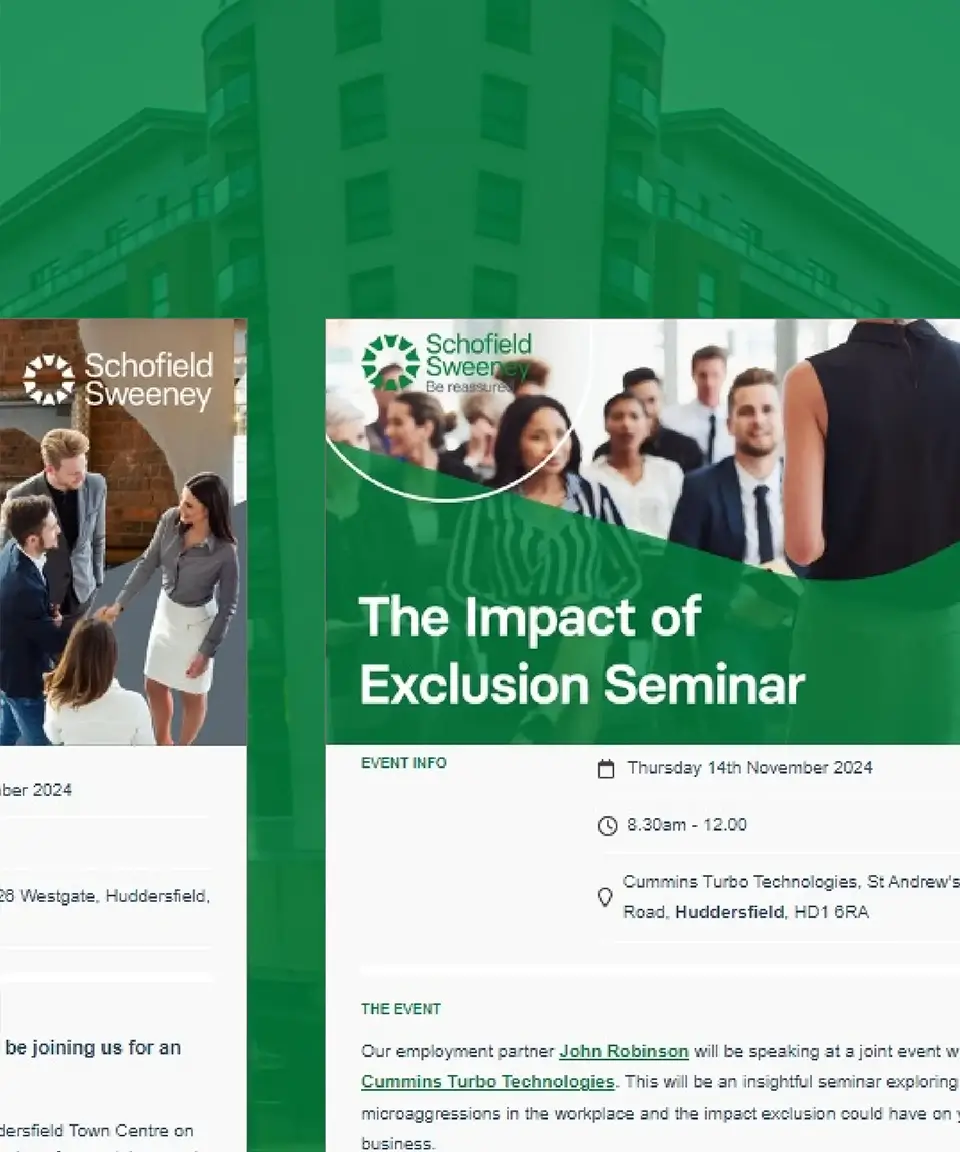
Schofield Sweeney is an award-winning law firm offering full-service legal advice to businesses and individuals, with three offices in West Yorkshire and one in central London. It is regularly named one of the top law firms in the UK and one of the best places in the country to work.
The team wanted to streamline its event automations, including the Zoom integration for webinar invitations, which had caused issues before. The automations relied on a large number of custom contact properties to segment people properly, for example whether they had RSVPd to an event or attended one before.
Beyond events, Schofield Sweeney wanted to explore how automations could improve internal processes, such as recording meeting notes against contacts in HubSpot.
This project used two parts of the system: CRM & data, and proactive email. Most of the work sat in HubSpot, rebuilding the automations behind every event, with new templates and content for the emails those automations send.
We rebuilt Schofield Sweeney's HubSpot automations for in-person events (free and ticketed), sports days such as golf and tennis, and webinars, with custom properties for segmentation and Zoom and Microsoft 365 connected through Zapier.
New email templates, email content, header templates and a design system that keeps all the branding in one folder give every event invitation and follow-up a consistent look.
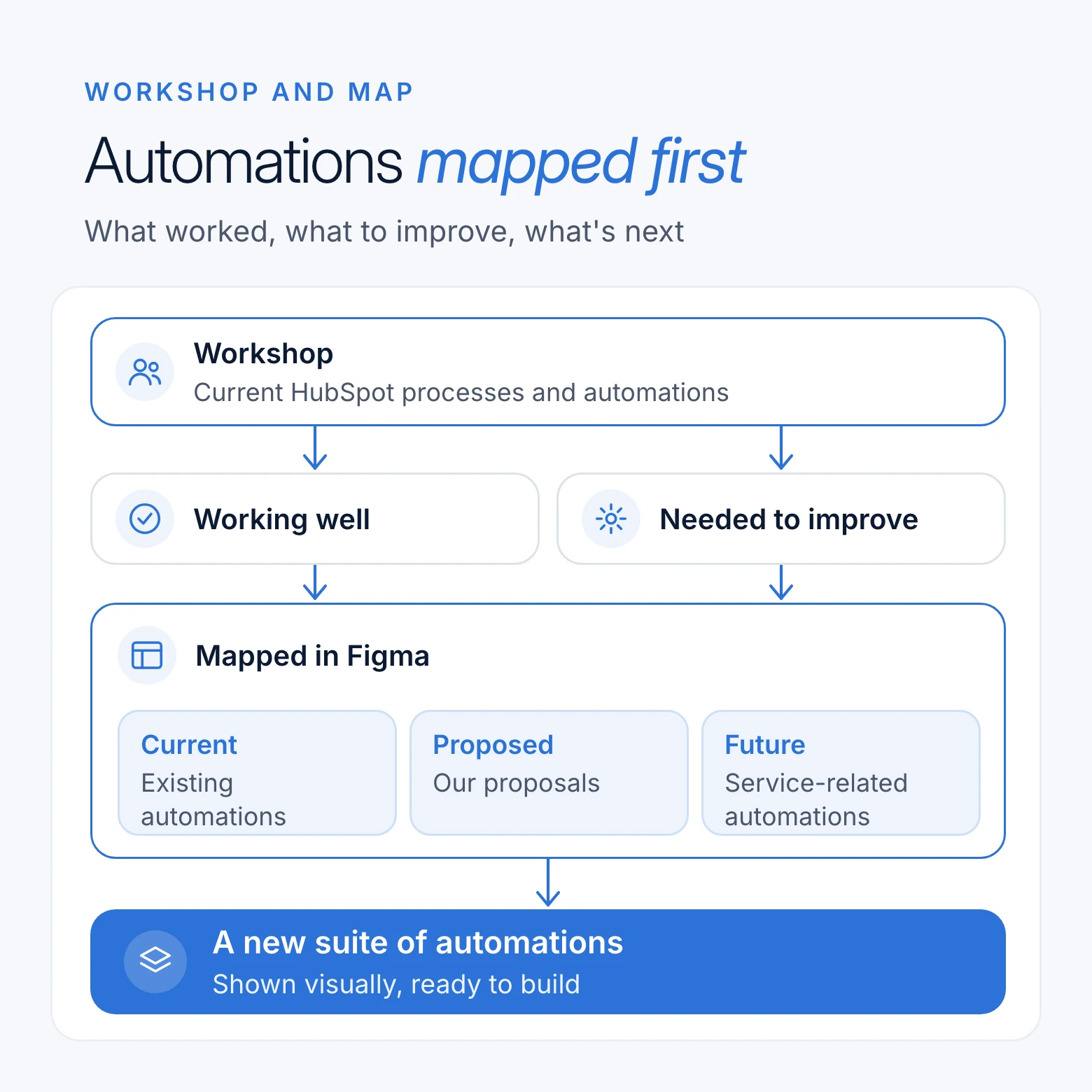
Following a recommendation on LinkedIn, we started with a workshop on Schofield Sweeney's current HubSpot processes and automations: what was working well and what needed to improve.
From that simple starting point, we mapped the existing automations and our proposals in Figma, showing visually how a new suite of automations could work for the firm. The design also covered future needs, such as service-related automations.
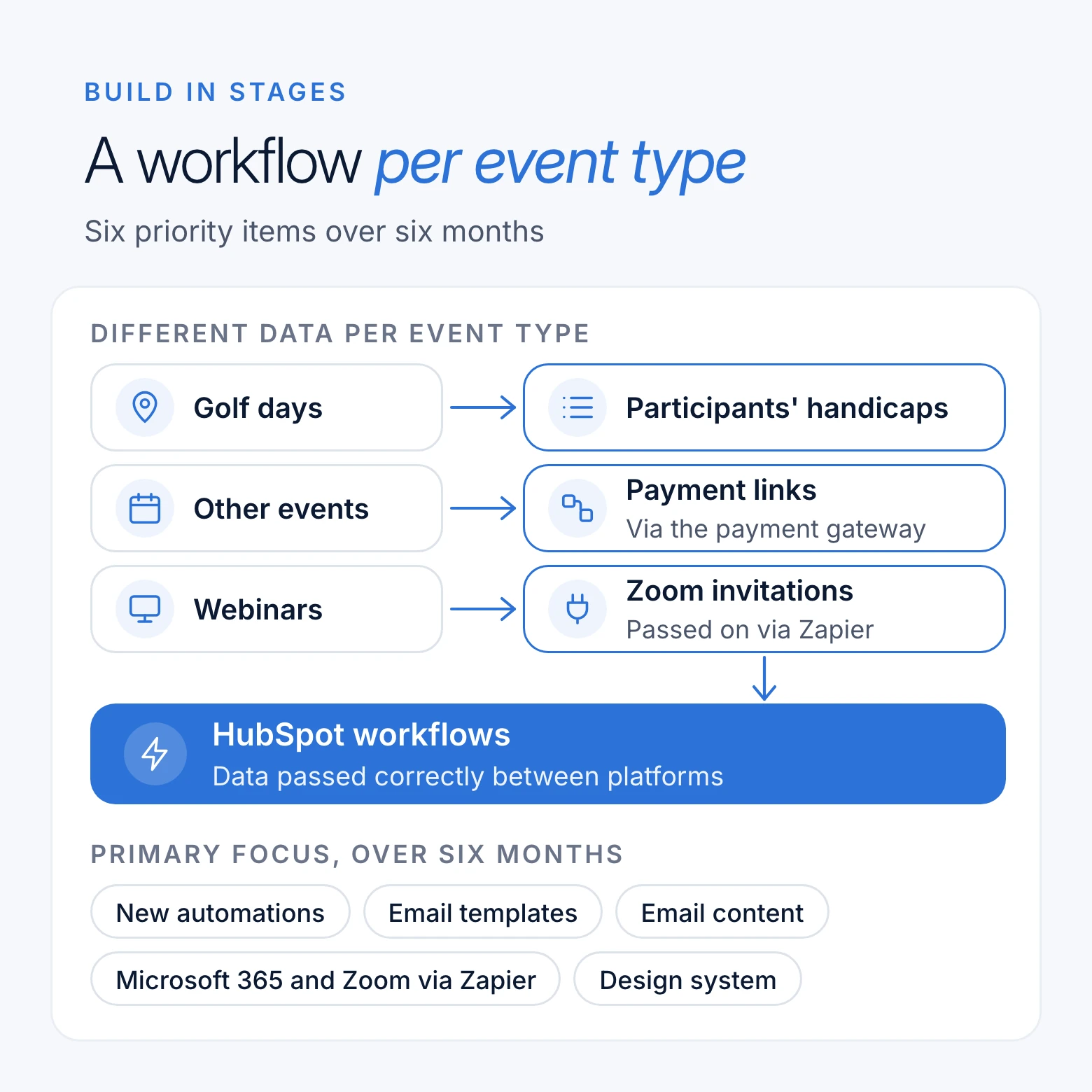
Each type of event needed its own automation. Golf days needed participants' handicaps, and other events needed payment links sent through the client's payment gateway. Existing HubSpot integrations added complexity, so we made sure information passed correctly between platforms.
We proposed the work back to the client as a multi-stage process, which let us break down and project manage each step. We delivered six top-priority items over six months, covering new automations, email templates and content, Microsoft 365 and Zoom integrations via Zapier, and a design system that keeps all the branding in one folder.
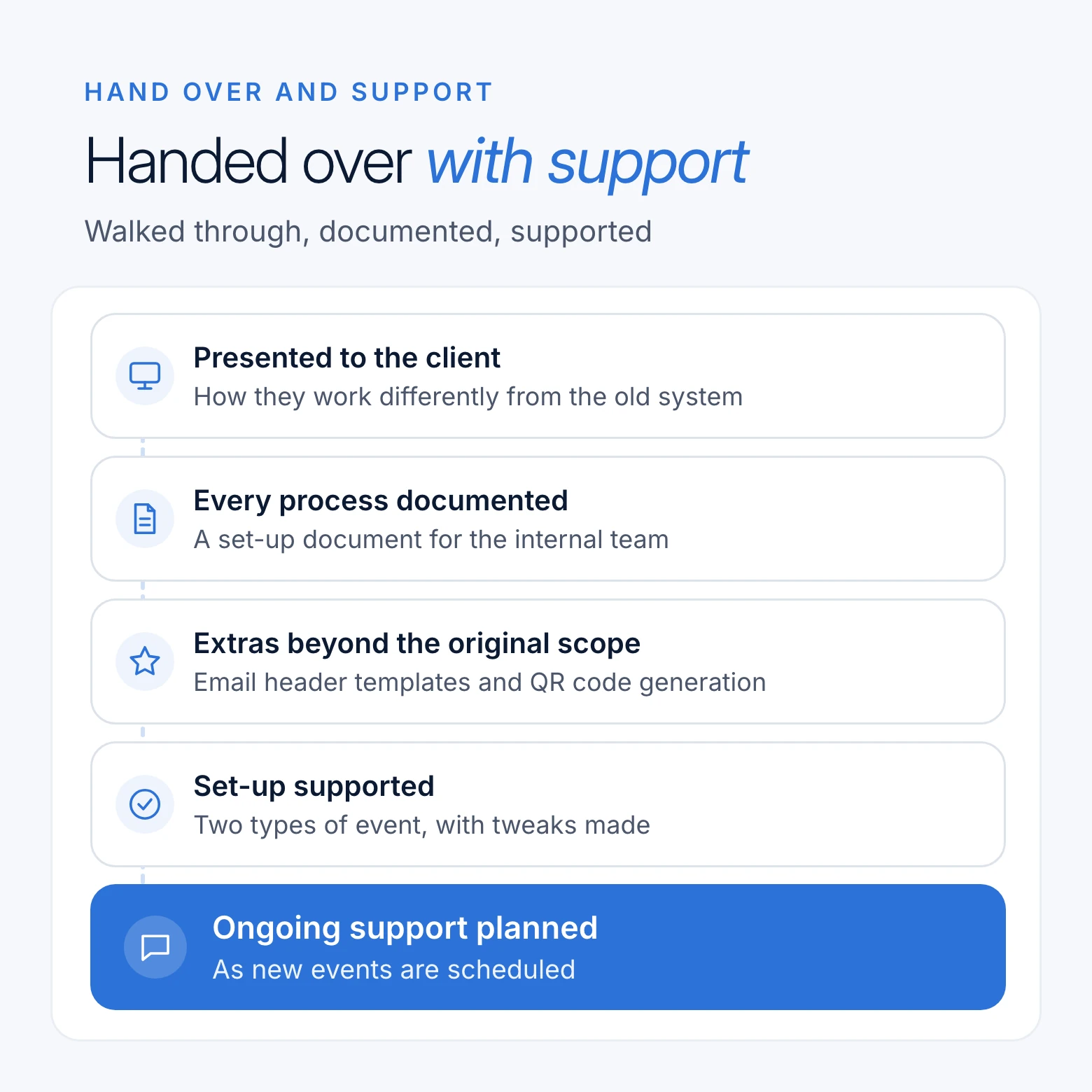
Once the work was complete, we presented it back to the client and walked the team through how the new automations differ from the old system. We documented every process needed to set them up, so the internal team could make set-up as easy as possible. We also added extras that were not originally scoped, including email header templates and QR code generation.
To check the automations worked as expected, we then supported set-up for two types of event, made the tweaks needed and planned ongoing support as new events are scheduled.
HubSpot is a very capable, yet complex CRM and marketing system. We’ve adopted it at Schofield Sweeney but weren’t getting the most out of it. Thanks to working with Ascensor we’ve been able to make big improvements to all our automations, including meeting sequencing, nurturing and follow-up.

Schofield Sweeney has hugely increased the efficiency of its events process. The team now manages a much more streamlined process, with better satisfaction among recipients.
The new automations hugely increased efficiency for the events process, with six priority items delivered over six months.
Our support lets the team manage a much more streamlined process, with enhanced recipient satisfaction.
The automation work also improved Schofield Sweeney's internal processes, beyond events.
A capable CRM is only as good as *the workflows behind it.*