Building a first-party data strategy for gaming companies

How to collect, unify and activate player data in a privacy-first world.

For gaming studios, publishers and platforms ready to move beyond third-party tracking and build direct relationships with their players. Whether you're navigating privacy changes or looking to improve retention and monetisation, this guide provides the framework you need.

Get instant access to Building a first-party data strategy for gaming companies

This practical whitepaper gives studio leaders, marketing teams and product managers the insight you need to understand how first-party data works, why it matters now and how to implement it in your organisation.

By clicking Download, you agree that Ascensor may store and process your information to deliver the requested content and occasional related insights. You can unsubscribe at any time.

All set - here’s your copy!
Download your whitepaper
Have questions about implementing the strategies? Get in touch and our team will be happy to help.
Oops! Something went wrong while submitting the form, please try again.

Why gaming companies can't afford to wait on first-party data

The UK gaming market reached £5.4 billion in 2025, growing 7.4% year-on-year. Mobile gaming alone generated £1.88 billion. But while revenues climb, the ability to understand and reach players has declined sharply.

Apple's App Tracking Transparency reduced iOS tracking opt-in rates to around 30%. User acquisition costs rose 20-30%.

Consumer spending on mobile games dropped approximately £8-10 billion globally in the two years following implementation. The traditional playbook for acquiring and monetising players no longer works as it once did.

Research from Boston Consulting Group shows that brands using first-party data for key marketing functions achieve 2.9 times revenue uplift and 1.5 times greater cost savings. Yet most gaming companies haven't harnessed this potential. Only 18% of gaming platforms both track and have access to market data in real time, despite 80% believing such access is critical.

The companies building first-party data capabilities now will compound their advantage over time. Those waiting for the old model to return will keep falling further behind.

Download the whitepaper

"The companies that master both strategy and execution will not only stand out, they'll lead. Most gaming businesses know what they should be doing with player data. Far fewer actually do it consistently, measure results and iterate based on evidence."

Andrew Firth | Managing Director, Ascensor

Inside the guide: Your first-party data roadmap

A practical framework for collecting, unifying and activating player data. Each chapter includes actionable guidance you can apply to your own games and platforms.

The UK gaming landscape

Market size, growth trajectories and the data disconnect affecting most gaming companies. Why only 18% of platforms have real-time data access despite 80% considering it critical. The mobile challenge and what ATT changed.

Why first-party data matters now

The privacy shift from tracking to consent. How first-party data delivers 2.9x revenue uplift. What gaming companies can collect across identity, behaviour, transactions, preferences, technical and community data.

Building your data collection framework

Starting with strategic goals. Mapping collection touchpoints from registration to in-game events. Designing for consent and transparency. Creating genuine value exchange with players.

Unifying player identities across platforms

The identity challenge across mobile, PC, console and web. Building unified player profiles through identity resolution. Customer Data Platforms and their role in gaming. Architecture choices from traditional CDP to warehouse-native approaches.

Activating data for growth and retention

From insight to action. Using first-party data for smarter acquisition through lookalike modelling and cross-promotion. Personalisation that improves engagement. Churn prediction and lifecycle marketing. Monetisation optimisation through segmentation and timing.

Technology and infrastructure requirements

Building the data stack from collection to activation. Gaming-specific requirements for high-volume events and real-time processing. Integration architecture that connects games, marketing and analytics.

Privacy compliance and player trust

The UK regulatory landscape including GDPR and Data Protection Act. Privacy by design principles. Building genuine player trust through transparency, control and visible value exchange.

Measuring success

Key performance indicators from data coverage to monetisation impact. Building a measurement framework with baselines and controlled experiments. Continuous improvement processes.

Case study spotlight

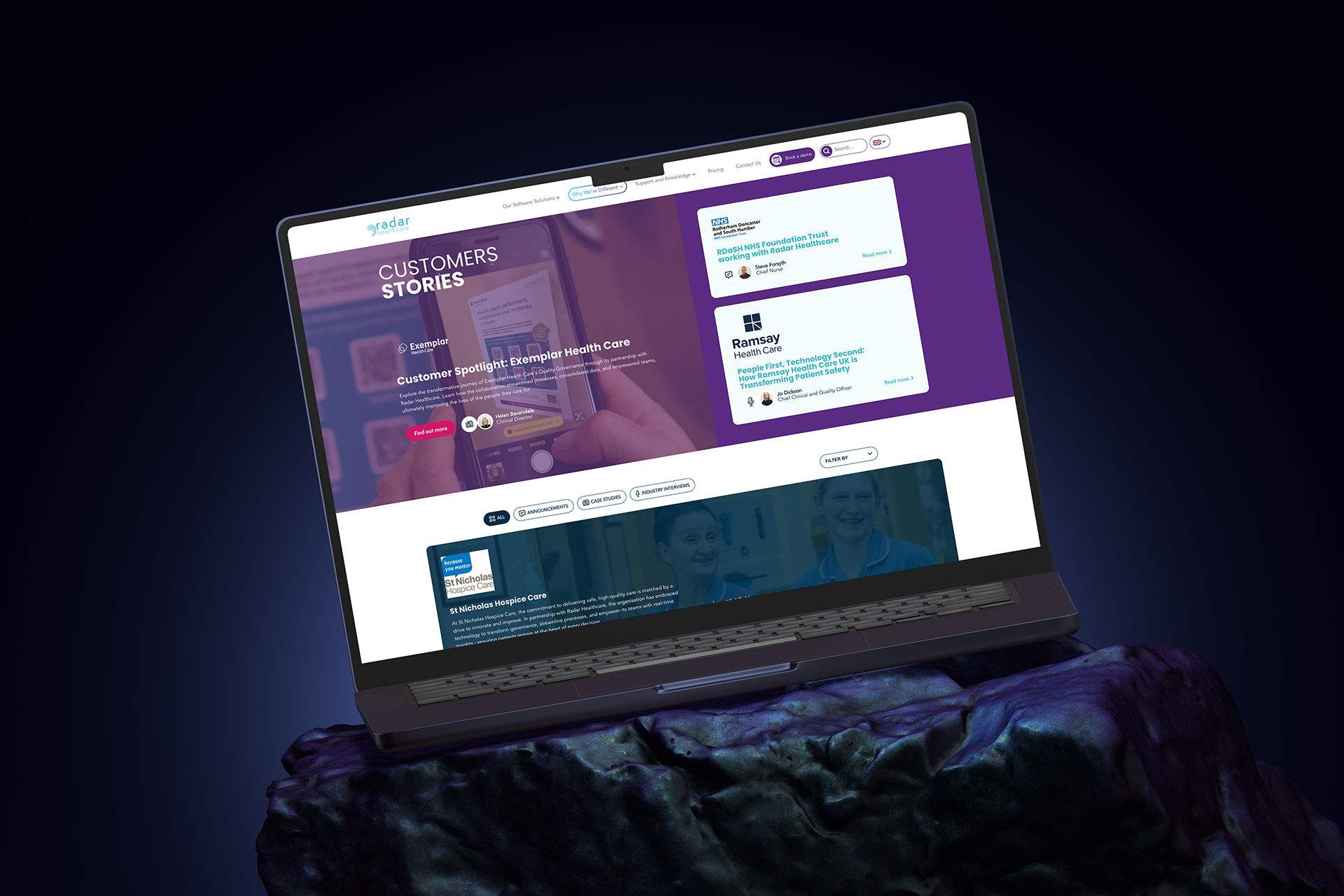
Radar Healthcare

Radar Healthcare asked us to improve on-site performance and lead capture. We migrated analytics to GA4, streamlined CRM and marketing automation, and redesigned the Book a Demo page with clearer story flow, social proof and a sticky form. A month-long A/B test validated the new layout, which then rolled out to all users.

  • +571% conversion rate on the Book a Demo page.

  • +49.7% increase in overall on-site conversions.

  • Organic leads matched PPC for the first time

Optimise, test, convert - see what you can achieve

What the experts are saying

Download the full guide

"Ascensor's hard work is making a noticeable impact, and I'm really excited about the positive direction we're heading in. A big thank you to the Ascensor team for making our digital journey smooth sailing.”

Laura Dyson

SEO and CRO specialist | Radar Healthcare

Looking ahead: The trends shaping gaming data strategy

The gaming landscape continues evolving rapidly. The whitepaper explores the developments your business should be planning for now, including:

Real-time personalisation as baseline

Players increasingly expect experiences tailored to their preferences and behaviour. Gaming companies lacking the data infrastructure to personalise in real time face growing competitive disadvantage as player expectations rise.

Cross-platform identity resolution

Players engage across mobile, console, PC and web. The ability to recognise and understand the same player across platforms becomes critical for delivering consistent experiences and accurate measurement.

AI-powered player intelligence

Machine learning models that predict churn, recommend content and optimise monetisation require quality first-party data as their foundation. Companies with strong data assets will extract more value from AI investments.

Privacy regulation continues evolving

Regulatory scrutiny of gaming data practices is increasing, from loot box mechanics to data collection from younger players. Building privacy-first practices now creates both compliance protection and competitive advantage.

Ready to build your first-party data strategy?

This whitepaper gives you a clear, practical framework for taking control of your player data. Whether you're evaluating Customer Data Platforms, designing collection strategies or planning personalisation initiatives, you'll have the insight to make confident decisions.Understand what data to collect. Build the infrastructure to unify it.

Activate it across acquisition, engagement and monetisation. Measure results and improve continuously.

Stay ahead - download now